
Your scalp is living skin, with its own oil glands, microbiome and barrier function. Yet most hair routines treat the scalp like background. Here’s what changes when you start thinking about scalp care the way you would skincare.
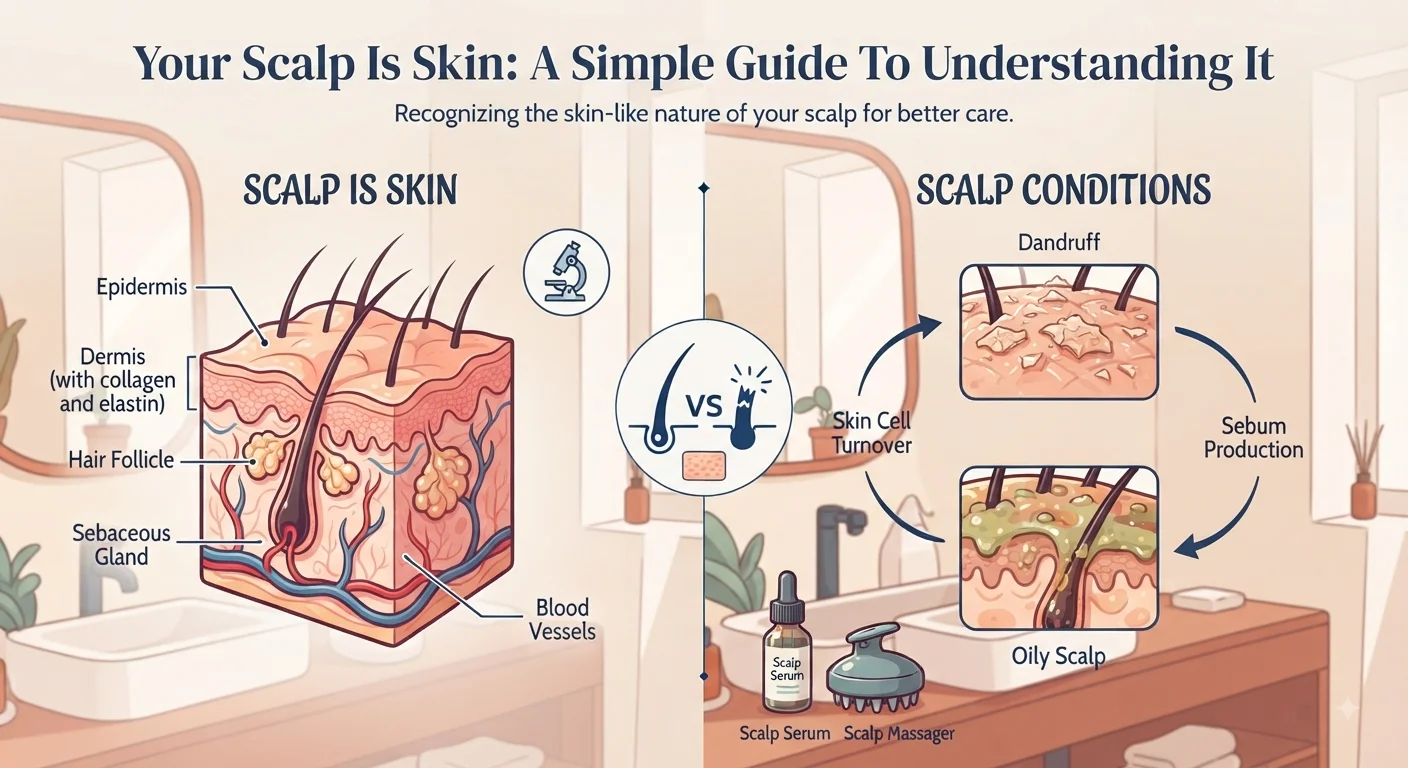
Why we treat scalp care as skincare, not an afterthought
Most hair routines are built entirely around the strand — texture, shine, length — while the scalp is treated as background. But the scalp is living skin, with its own oil glands, microbiome and barrier function. Everything you would ask of a good skincare routine — gentle cleansing, balanced hydration, protection from stripping ingredients — applies here too. When scalp care is skipped, hair care becomes reactive: chasing dullness or breakage without addressing where hair actually grows from.
Reading your scalp: Three patterns and what they mean
Dry scalp. Tight, flaky, sometimes itchy by midweek. Your scalp isn’t producing enough oil to protect itself. This usually means your cleanser is stripping too aggressively, or your scalp simply needs more moisture support.
Oily scalp. Greasy by day two, sometimes itchy or inflamed. Often a sign your scalp is overcompensating for stripping — wash it too harshly or too often, and it responds by producing even more oil. Or it’s genuinely humid where you live, and your scalp is just doing its job.
Sensitive or reactive scalp. Itches, feels tender, sometimes breaks out in small bumps or inflammation. Usually a sign of either a compromised barrier (too much heat, harsh products) or a genuine sensitivities to a specific ingredient.
Frequently asked questions
How often should I actually check in on my scalp? Once a week is enough. Before a wash, part your hair in a few places and look and feel rather than just wash on autopilot.
Ayurveda’s real strength here isn’t reversing grey hair — it’s supporting the underlying nutritional and stress-related imbalances that often accelerate it in the first place.
